Thursday, September 15, 2011

Evolution and the New Era: How "My Beautiful Dark Twisted Fantasy" Changed My Entire Perspective of a Music Genre

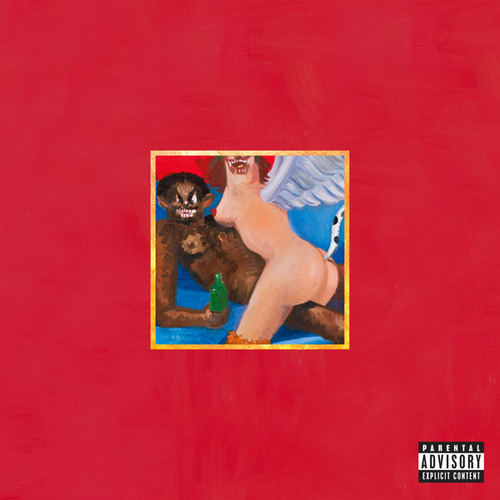
Kanye West's 2010 album, "My Beautiful Dark Twisted Fantasy." An album that I honestly believe is my generation's "Thriller." Yes. Really. I said it.

Track Listing:

1. Dark Fantasy

2. Gorgeous

3. Power

4. All of the Lights (interlude)

5. All of the Lights

6. Monster

7. So Appalled

8. Devil In a New Dress

9. Runaway

10. Hell of a Life

11. Blame Game

12. Lost in the World

13. Who Will Survive in America? (poem/excerpt by Gil-Scott Heron)

14. See Me Now (bonus track)


Up until around this past July, I was what you would call a hip-hop purist or elitist. I believed that all Hip-Hop and Rap released between 1980 and 2000 was great, everything released between 2000 and 2005 was decent, and everything in following years was a decline for the genre. I thought that Rap was in a state of emergency and needed a return to form sooner rather than later, or else it would be forever desecrated by corporate greed and "ringtone rappers." While I believe this is true to an extent (corporatism has a much larger hold on hip-hop than it used to, and ringtone rappers like Lil' Wayne are even more popular now than they were in 2006), I was wrong about hip-hop needing to return to it's golden age, and wrong about the genre as a whole taking a turn for the worse. The genre is evolving, and the album that has started this new era is Kanye West's 2010 masterpiece entitled, "My Beautiful Dark Twisted Fantasy."


What makes this album so groundbreaking isn't West's lyrical delivery (I've always preferred a more poetic approach to rap lyrics) or his content (West's older albums dealt more with social issues like education, and racism while his newer material is more introspective and often comes off as arrogant), but rather the way all of the songs are produced and mixed. West blends the sounds of all his previous albums with this most recent production, mixing the soulful sounds of "The College Dropout" (2004), and "Late Registration" (2005) along with the electronic sounds of "Graduation" (2007), and finally, the depressingly melodic tones of "808s and Heartbreak" (2008). Not only does he incorporate qualities from his previous albums, but West also does something with samples that I have never heard before in hip-hop; rather than just taking an excerpt from a song, applying a beat, and looping it while he raps over the audio, West just takes very subtle samples (like Pete Rock, C.L. Smooth, Marvin Gaye, Smokey Robinson, and Gil-Scott Heron) and forms his own full composition of music to match it. The samples in this case, are used as accompaniment for an original piece of music rather than being a part of the beat itself as was done in the earlier days of hip-hop. The most notable song on the album is "Runaway," a whopping 9 minute long emotional epic fueled by an orchestra of violins, a piano, a CL Smooth/Pete Rock drum/vocal sample, and Kanye West's actual (though at times, cringe worthy) singing voice. West explained that with this album he was going for a more rap/rock sound and he succeeded. When I say rap/rock, I don't mean like Rage Against the Machine (a band that used heavy metal instrumentation with rap vocals) but more like the Gorillaz, who blended rock sounds with rap sounds so seamlessly that their music essentially became it's own genre. Because of this brilliantly produced new sound, "My Beautiful Dark Twisted Fantasy" has actually changed rap forever.

This brings me to my final point: the new era. As much as i love the classic rap sounds i must inform all hip-hop elitists that the genre is far from dead. While the radio does have an over saturation of mainstream rappers who all sound the same, what I've realized is that not only does rap have innovative and ambitious saviors like Kanye West, but even these mainstream rappers we love to hate are helping the genre rather than hurting it, and here's why: when rock music began in the '50s it was just one genre, and it stayed that way until the '70s when it began to split into sub genres like metal and punk. The '80s saw the rise of glam metal, the '90s was alternative, and rap-rock, and finally, the '00s saw the blend of blues and garage rock. As rap is a much younger form of music than rock, it makes sense that it would just now begin to make the same transformation. Before, hip-hop was just one genre, but now, like rock, it is beginning to split into sub genres. We now have pop-rap (those rappers we love to hate such as Lil' Wayne and Soulja Boi), more traditional rap (Common, Mos Def, Talib Kweli, Nas, Eminem and Jay-Z), and what could be considered experimental (Kanye West, and Gorillaz).

We need to be happy. Hip-Hop is growing up and developing as opposed to be being placed in a little box for all of it's existence. If "My Beautiful Dark Twisted Fantasy" is any indicator this is not a dark or depressing time for rap, but rather, the start of something very exciting.


Wednesday, February 16, 2011

Will Call of Duty be Next?

Recently Activision's decision to cancel Guitar Hero has caused me to wonder if this is a pattern that is waiting to happen with all of the company's games; to be more specific: Call of Duty. Activision feels the need to release these games every year, and while the series' quality hasn't dropped off yet I feel that it might get that way if Activision doesn't start to understand that milking a franchise isn't good for business in the long run. Eventually people are going to get sick of buying a slightly enhanced version of the same game every single year. The company has just realized this with Guitar Hero, and they are canceling it simply because it isn't selling anymore. Why don't they just learn their lesson with GH and give Call of Duty a breather for a year? Wouldn't the reception of a Call of Duty every two or three years be better than the reception of one every year? Not to mention that people have more of an opportunity to purchase "Black Ops" as opposed to say, buying "Black Ops" when it gets on sale in the late summer only to realize that they have to buy Modern Warfare 3 by the Fall. People would be more motivated to buy a new addition of the series every two or three years because by then they might view the current installment as dull or boring. By then they will want something new. What do you think about Activision's decision to keep pushing a new CoD every year even after their dismal experience with "Warriors of Rock?"


Monday, June 28, 2010

E3 2010 Microsoft Conference

I know I'm about 2 weeks late, but I figured it would be best to post my thoughts on E3 2010. The following will cover everything that the Big 3 (Microsoft, Nintendo, and Sony) unveiled at their respective press conferences, and how I felt about each one.

We begin on the morning of June 14 when Microsoft began their press briefing:

The conference began with a trailer, and a demo of Treyarch's Call of Duty: Black Ops.

The trailer can be seen at this link:http://www.youtube.com/watch?v=Xv6U7IqNis8

After the trailer was shown, Treyarch Studio Head, Mark Lamia came up to demo a few sequences in the game.

The demo can be seen at these two links:

http://www.youtube.com/watch?v=yrurGjHbPU8

http://www.youtube.com/watch?v=V4gSJvjy9rE&feature=channel

The storylines in the Call of Duty series have never interested me, and this one doesn't look like it will really change that at all. As always the art style is visually stunning, and the game is looking very well done, especially since it is a Treyarch CoD game as opposed to an Infinity Ward game. While the game is looking great, only time will tell if it turns out to be more than just good looks.

After the demo, Don Mattrick, Senior Vice President of Microsoft's interactive entertainment branch came onstage to explain that Call of Duty: Black Ops' multiplayer map packs would all be debuting on Xbox 360 first as a way of getting consumers to purchase the game on 360 as opposed to PS3. Microsoft's need to be first in distribution has never failed before so I wouldn't think that it would fail them this time either.

Next, Hideo Kojima showed up to show off gameplay of Metal Gear Solid: Rising, the first Metal Gear game since Sons of Liberty to be available on Microsoft's Xbox.

The trailer can be seen here: http://www.youtube.com/watch?v=AtM3PGyiQUc

I am proud to say that my eyes got incredibly wide with excitement when I saw how beautiful the game is looking, and I was even more impressed with how brutally realistic the physics are. However there were a few problems I had with the trailer:

1. Kojima still has yet to give us any details regarding the game's storyline, and where it exactly fits in the Metal Gear timeline. It's obvious that the game is set sometime after the events of Sons of Liberty due to Raiden's use of the sword, and his costume, but I'm not totally sure if the story will precede Guns of the Patriots or if it will be set sometime after GotP (the latter is more likely)

2. The game is looking a little too pretty. Confused? Remember TGS 2005 when Kojima showed us the first bit of gameplay for "Guns of the Patriots?" At the time the game was looking exactly the way Rising looks now with a squeaky clean frame rate. Only a few months later at E3 2006, Kojima showed us new footage of GOTP. This new footage didn't look quite as good as the version we had seen at TGS '05, and the frame rate had dropped considerably, proving that what we had seen at TGS wasn't actually gameplay, and that it was nothing more than a tech demo. I'm a bit worried that Rising might be following the same fate, and that if we see it at this year's TGS or next year's E3 it won't look quite as good as it did during this conference.

After the Metal Gear trailer, Cliff "Cliffy B" Bleszinski appeared to show a live demo of Gears of War 3.

The demo can be seen here: http://www.youtube.com/watch?v=KG2lof9pWL8&feature=channel

Overall GoW3 doesn't look that different from the first 2 games in the series although it should be noted that the graphics are looking a bit more polished, so obviously Unreal Engine has undergone a slight make over. The new Lambent enemies are looking much more intimidating than the Locust, and the new cooperative gameplay seems a bit deeper now that you can actually swap weapons with your allies. My personal favorite part of the demo was the return of the Berserker. While I have always thought that the Halo games have a much more interesting, and complex storyline compared to Gears of War, it is worth noting that GoW has succeeded in the areas where Halo has failed:

First, in terms of gameplay Gears has always encouraged players to be more strategic than simply running around guns blazing. In GoW, going out into the line of fire will kill you within ten seconds, and sometimes even less.

Second, Gears has always captured it's post apocalyptic theme just right; everything is gray and depressing as it should be. Halo is a story about religious fanaticism at it's absolute worst, as well as genocide. For a game to have themes that are this dark, it seems a bit inappropriate that the game's environments are mostly beautiful green rain forests, and hills. I could go on about Halo's shortcomings but this is about E3 so I will save that soapbox for a later day...

Next up was Peter Molyneux, creator of the popular RPG series Fable. He showed us a trailer for Fable III due out in stores this October:

http://www.youtube.com/watch?v=lpR2Uy2VLMc&feature=channel

Like Call of Duty the Fable series has never really impressed me that much. The first game was a disappointment, while the second game was an improvement but still wasn't near perfect. One reason why the third entry has potential however is the concept of being the king of Albion. Having this kind of control over what happens in the game world is fresh, and could be interesting.

Next, Microsoft announced a new partnership with Crytek, and a new project for the two companies called "Codename: Kingdoms." Since Kingdoms only had a live-action teaser almost nothing is known about the game, so there is not much to talk about, but here is the teaser:

http://www.youtube.com/watch?v=vXtdoTZ3jJ4&feature=channel

The only thing I can say about Kingdoms is that I think it will be a Real-Time Strategy game, since the word "Kingdoms" seems to imply that it will deal with multiple empires. Of course it could also be a new kind of sandbox game that deals with an adventure over several real world (or perhaps even fictional) kingdoms. Don't take my word for it, I'm just speculating.

Of course, the next game was every one's favorite series, Halo: Reach. The multiplayer beta for the game was released in early May for about 3 weeks and with the exception of a few glitches Reach's multiplayer was an improvement over Halo 3. Since most fans (including myself) have already played the game's multiplayer, the trailer that was shown at the conference was all about the game's story. Reach is set mere hours before the events of the first Halo game. The plot deals with the brutal battle, and eventual destruction of the second-to-last human planet known as Reach.

Here's the demo:http://www.youtube.com/watch?v=0ZNhC1onduY&feature=related

At first glance the demo isn't anything remarkable to anyone who has played a Halo game before, but what I found interesting and enjoyable about the demo were the little details included in it. Reach seems to be pulling the series into the dark and serious mood that I have repeatedly said needs to be showcased in the Halo games but is never shown in an appropriate fashion. The visual style looks a lot more polished than previous entries, and the battles are looking much more epic, with many enemies appearing on screen at once. One can only hope that Bungie has improved the friendly AI this time around. The biggest surprise about the demo was the space combat, something that has never been done in a Halo game before. What makes the showcase of space combat interesting isn't the simple fact that it is going to be a part of the game, but because of how the transition from ground combat to space is entirely seamless, and there doesn't appear to be any break in the overall flow of gameplay. Bungie claims Reach is the most ambitious project they have ever done, and one can only hope that they really mean it this time.

As for the hardcore games this was all that Microsoft had to offer. The remainder of the show was completely dedicated to Microsoft's new motion control hardware, Kinect (formerly known as Project Natal). There was far too much about Kinect in the conference that I won't go over everything they revealed so I will give a summary over how the hardware works, what kinds of games can be expected for it, and my true opinions of the new project.

Kinect is Microsoft's answer to Nintendo's Wii. But Kinect isn't simply a Wii knock-off, it has some features that are more sophisticated. The biggest difference is that Kinect requires no controller. The hardware is completely motion sensitive, and you are the controller. You wave your hand to sign into your Xbox Live profile and this takes you to a hub with all of your typical Xbox Live features (Netflix, Zune Marketplace, Facebook, Last.FM, etc.). You can then select any of the options just by moving your hand to select something. But it doesn't have to be controlled all by your hand; Kinect is also sensitive to your voice and responds by selecting whatever you say aloud. If you say you want to connect to Netflix, Kinect will get you there. Your movies can be controlled with your hands and voice too: if you want to rewind to a certain part you missed just bring your hands up and you can move to the part of the film you want to see. Your videos can also be played, paused, and stopped just by saying the respective phrase.

Another part of Kinect allows you to video chat with your friends and family. You can communicate with people who either have Kinect or Windows Live Messenger. You can also watch movies, or shows with people through Video Kinect communication. Kinect also tracks your skeleton as you move, so the camera will follow you and you don't have to adjust it in anyway.

Now the games:

All of the games featured on Kinect are the typical motion control games that can be found on the Wii, and in some cases other consoles as well.

Kinectimals- a game for young kids which is Microsoft's answer to Nintendo's Nintendogs. You take care of the animals, and they respond to how you treat them.

Kinect Sports- Once again, Microsoft's answer to Nintendo's Wii Sports. Players use their Xbox Avatars to play through a series of sports games.

Joy Ride-an arcade racer

Your Shape: Fitness Evolved- an exercise game not unlike Wii Fit. The only difference between the two is that Kinect focuses on your heat signature so it presents a full replica of your body when you step in front of it.

Dance Central- A dancing game that is based completely on your movement as opposed to Dance Dance Revolution where you just have to step on the proper arrows to get a good score.

Lucasarts also announced a Kinect Star Wars game that has no title yet.

Forza Motorsport for Kinect was also announced.

In addition to Kinect, Microsoft also announced that you will be able to stream ESPN through your 360. I'm not much of a sports fan but I imagine that this is good for people who might have an Xbox, but don't have cable. If any of those people exist...
One really cool thing about ESPN on Xbox is that you can tell Kinect that you want to see a replay on a sports event that you are watching, and it will show you a replay. You can also ask for any game you want to see, and Xbox will give it to you. Plus, ESPN on Xbox does NOT require an additional fee, which is a nice bonus.

Kinect will be available in stores on November 4, 2010 and it will have 15 exclusive titles at launch.

So here is my view on Kinect:

I believe Kinect definitely has the potential to be better than the Wii. It has more sophisticated technology than Nintendo's Wii, and everything from the way it works to the way games look seems to be more advanced. Here is the problem that Microsoft is going to run into with this new hardware: Nintendo released the Wii on November 19, 2006. Its original retail price was $249.99 in contrast to Xbox 360's $399.99, and the Playstation 3's $599.99, and at this point everyone who wanted a Wii already has one. If Microsoft wants to be more successful than Nintendo, or even come anywhere close to them, they have to find a reason to make Wii owners spend $300 on an Xbox with Kinect hardware built-in. The fact of the matter is that Nintendo has a four year advantage, and while Microsoft's Kinect has more sophisticated hardware, Wii has all of the games. Kinect will only have games that are basically just Xbox versions of the titles Wii owners have had access to for years.


As a conclusion to their press conference, Microsoft dropped a bombshell:

A new, completely remodeled Xbox 360. The new 360 is smaller, quieter, and has a 250gb hard drive. The new model also includes built in Wi-Fi. Perhaps the most surprising thing about this new console is it will cost the exact amount as the current 120gb Xbox 360. On top of that it was also announced that this new model would be available in stores the very same week as E3, and everyone at the conference would be given one that day, free of charge. This was easily the biggest surprise of the day.

In the end, Microsoft's press conference was good. Not great, just good. They started off strong enough with the exclusives for the hardcore gamers, and Kinect would have been fine if they had simply focused more on the hardware itself as opposed to the Kinect software. But because of their focus on the latter, the majority of the conference was a bore, with the only entertaining parts being the very beginning and the very end.

That's it for Microsoft but I will have the Nintendo, and the Sony conferences up soon.

Monday, April 26, 2010


Special Comment

I'm doing something a little bit different:

Today I saw a CNN report about the violent video game debate going on in California and whether or not it should be illegal for minors to buy violent games. This is my comment on CNN's report as well as the issue itself:

First let me start by saying that CNN's coverage of this issue was absolutely 100% biased! They didn't even have the guts to bring someone onto the program who had a different view from the people discussing the issue. Instead all I heard was Campbell Brown voicing her own opinion (which correct me if I'm wrong isn't exactly something that a journalist on a "fair and balanced" news network should do) and the other two men basically echoing her. You can try and say that CNN was just stating the facts but actually CNN did NOT state the accurate information in that report! According to Campbell Brown and CNN, the game "Grand Theft Auto IV" features scenes of dismemberment and sexual assault. Both claims are absolutely FALSE! Grand Theft Auto does feature scenes of strong violence (scenes that are no more graphic than an episode of Law & Order. In fact I believe Law & Order is worse: it features REAL actors) but there are no scenes of body dismemberment and there most certainly are no scenes of sexual assault (something that Law & Order DOES feature) Here's a thought CNN: how about you do some REAL research and actually PLAY a game instead of report things that you simply heard from some other source?

And for the parents:
Video games have ratings, and they aren't difficult to read. Here's the 411: E = Everyone, T = Teen (13+), M = Mature (17+), and AO = Adults Only (I hope this one is self-explanatory but in case it isn't: 18+) Not only do these games have ratings but they even have content descriptors to tell you what kind of content these games include. I happen to own a copy of Grand Theft Auto IV so I will read you the content description for this Mature (17+) video game: Grand Theft Auto IV is rated M for: Blood, Intense Violence, Partial Nudity, Strong Language, Strong Sexual Content, Use of Drugs and Alcohol. Seems pretty detailed to me! If you don't want your kids playing a video game that might not be entirely suitable for them then don't allow them to play it. Also if you are afraid that your child might be so desensitized by violent entertainment that they would go out and actually hurt people because of what they saw or did in a video game then have a conversation with your kids and explain the difference between what is real and what isn't real. That being said, if you are a parent of a TEENAGER who has a problem understanding what is real and what isn't, then much more serious issues regarding your child need to be addressed IMMEDIATELY! YOU need to be the parent, NOT the government!

Thursday, February 4, 2010

Mass Effect 2 Review


In 2007, video game company BioWare (known for the critically acclaimed RPG, “Star Wars: Knights of the Old Republic”) released the first entry in their planned sci-fi trilogy “Mass Effect.” Like KOTOR, Mass Effect received a large amount of praise from critics and gamers alike. One of the big features of the game was the way it allowed players to shape the story based on the decisions they made throughout their journey. On January 26, 2010, the highly anticipated sequel was released, and I am happy to report that not only does it manage to stack up with its predecessor, but it even manages to surpass it in quite a few ways.

The story follows Commander Shepard two years after the events of the first Mass Effect. After his ship is destroyed in battle, Shepard is captured by the underground organization, Cerberus. The organization rebuilds Shepard, and he is tasked with forming a team in order to stop the aliens known as the Collectors from taking entire colonies. Perhaps the most talked-about element of the game’s story is that Shepard’s ultimate goal to stop the Collectors is expected to be a suicide mission, and if the player is not properly prepared for this mission, it is entirely possible for Shepard and his entire team to die a permanent death (this doesn’t really qualify as a spoiler since BioWare announced this story element months ago). This puts a new kind of pressure on the player never seen in games before, and it really something more developers should at least experiment with in future games. The story is very well done, but newcomers might have trouble following the plot if they didn’t play the first game. Another downside to the story is the fact that Mass Effect 2 deals primarily with character development, and the plot itself is pretty simplistic. Overall it doesn’t really add any new information that fans of the first game don’t already know. Despite not adding much to the progression of the trilogy, the suicide mission aspect of the plot still manages to keep players interested in how everything plays out.

One of the biggest differences Mass Effect 2 has over its predecessor is the completely new combat system. In the original game, players would have to build up their stats in order to use certain weapons efficiently. This sometimes led to frustration because enemies would be harder to dispatch if your assault rifle shots were all over the place. This time around however, the combat works like a traditional shooter and as long as your reticule is on an enemy your shots will hit. This makes combat much more enjoyable, and less like a struggle to stay alive. Taking cover now only requires a single button press, making protection less of a struggle as well. One problem with the cover system is that it sometimes feels unresponsive. At times I would press the button to go into cover, and after failing to get a response I would press it a second time only to find out that I was now jumping over the wall and right into enemy fire.

The game’s scenes of dialog have a more cinematic feel, with camera angles changing at the right time, and the new ability to interrupt characters at certain points. This new feature gives the player added control and it serves as a nice addition as well. Another feature from the first game that has been completely refined is exploring planets. In the first game the planets that you could land on all had the same basic layout, and the design got a bit dull fairly quickly. In Mass Effect 2, all of the planets have their own unique geography, and no planet looks identical to the last. This improvement does a good job at removing tedious level design, and making BioWare’s fictional sci-fi universe seem more realistic.

BioWare has absolutely outdone themselves with their latest entry in this epic space opera. Mass Effect 2 continues a story that has more plot and character development than some feature films out there, as well as addictive gameplay that serves as a massive improvement over its predecessor. We are only one month into 2010, and I doubt that any game released this year will be able to top this massive achievement. What a way to start the decade!

The Verdict: 5/5

Wednesday, January 27, 2010

Avatar Review

Film director James Cameron is considered to be one of the most talented directors of all time. From the first two “Terminator” films to “Aliens” and “Titanic,” every film Cameron has directed has achieved universal acclaim. Cameron’s newest film “Avatar” is a sci-fi epic that boasts “revolutionary” special effects, and has generated much hype since the beginning of 2009.

The film’s plot is set in the year 2154, and Earth has almost completely run out of all natural resources. Some humans have settled on a new world known as Pandora. This world is populated by a variety of creatures, including an indigenous population of humanoids called the Na’Vi. As a way of gaining the trust of the natives, human scientists start the Avatar program, placing humans into inactive Na’Vi bodies. The film’s main character, Jake Sully (Sam Worthington) joins the Avatar program, and during a mission is captured by the natives. Instead of killing him, they allow him to live among them and learn their ways. Over the next three months Jake learns about the Na’Vi culture and relays the information to his superiors to help them in their plan to move the aliens off of their land and collect the resources for Earth.

Perhaps the only flaw in the film’s story is its lack of originality. The plot is very reminiscent of films like “Dances With Wolves,” “Pocahontas,” “Ferngully,” and “Atlantis: The Lost Empire.” Despite this flaw, the story still manages to be interesting thanks to great acting, especially from the actors playing the Na’Vi, since they are supposed to be ten feet tall with tails. Character development, sound effects that make the audience feel like the film’s fictional world is literally all around them, and visual effects also succeed in making the world of Pandora come alive; making everything very believable.

Cameron’s record for making excellent films still stands thanks to this visually stunning fantasy story filled with action and drama. “Avatar” easily succeeds as one of the stand-out films of 2009.